Displaying 2271 - 2280 of 4261
Dates
Deadlines
2019-04-12

The conference will be held at the Lake Morey Resort in Fairlee, Vermont, USA, 4 - 6 June 2019.

The Eastern Snow Conference (ESC) is a joint Canadian/U.S. organization founded in the 1940s originally with members from eastern North America. Today, our members come from the United Kingdom, Japan and Germany, as well as North America. Our current membership includes scientists, engineers, snow surveyors, technicians, professors, students and professionals involved in operations and maintenance. The western counterpart to this organization is the Western Snow Conference (WSC), also a joint Canadian/US organization.

After last year’s celebration of the 75th meeting of the ESC in Washington, D.C., we return to a familiar venue in rural Vermont in close proximity to a long-time ESC supporter, the Cold Regions Research and Engineering Laboratory (CRREL), Hanover, New Hampshire, USA.

The scientific program is open to sessions on theoretical, experimental, remote sensing, modeling and operational studies of snow, ice, and winter hydrology. The ESC has only a plenary session (oral and poster viewing), allowing time to view and discuss the research of each participant. You are invited to submit an abstract for an oral or a poster presentation (please indicate type). Using the template available, an abstract of 200-250 words should be submitted by 12 April 2019.

Please visit the website above for more information.

Deadlines
2019-04-12

The EMS Annual Meeting 2019 will be held from 9 to 13 September 2019 at the at the Technical University of Denmark (DTU) on the Lyngby Campus near Copenhagen, Denmark.

The Annual Meetings of the EMS aim at fostering exchange and cross-fertilization of ideas in the meteorological, climatological, and related communities. Facilitating interactions, integration, and engagement of science, applications, and actors is our core objective. The session programme highlights these goals and offers many opportunities for enhancing collaboration across the entire weather and climate enterprise (public, private, academic, users, and NGOs) to benefit societies in Europe and worldwide.

In addition, a particular focus of the 2019 Annual Meeting, reflecting the interests and activities of the host institutions, will be on Arctic (and Antarctic) issues and challenges.

Important dates:

  • 6 March 2019: Closing date for EMS YSTA applications.
  • 12 April 2019: Closing date for abstract submissions and support applications.
  • 15 May 2019: Letter of acceptance.
  • 19 June 2019: Letter of schedule.
Conferences and Workshops
2019-04-10 - 2019-04-11
Valencia, Spain

3rd International Conference on Geology & Earth Science (Geoscience-2019) aims to discover advances, practical experiences and innovative ideas on issues related to geology and earth science as well as a breadth of other topics. The geoscience-2019 conference creates a platform for expert’s interaction, simultaneously with networking opportunities and also provides an opportunity to explore the innovative ideas of the other communities, companies, and associations.

This International Conference on Geology & Earth Science includes Plenary lectures, Keynote lectures and short courses by eminent personalities from around the world in addition to contributed papers both oral and poster presentations.

GeoScience-2019 covering a total of all disciplines in Earth Science & Global Geology. We invite the contributions related to Geoscience. You can submit your work in these broad themes:

  • Environmental Geology
  • Groundwater and Hydrogeology
  • Marine Geosciences and Oceanography
  • Seismology
  • Natural hazards & disaster management
  • Carbon farming &carbon cycle
  • Mineral Exploration
  • Remote Sensing and GIS
  • Volcanology and Tectonic Plates
  • Fossils and Paleontology
  • Soil Science
  • Issues in Global Warming and Climate Change
  • Geochemistry and Economic Potential of Rocks
  • Surface and Borehole Geophysics
  • Petrology
  • Paleoanthropology and Paleoclimatology
  • Teaching and learning in Geosciences
Webinars and Virtual Events
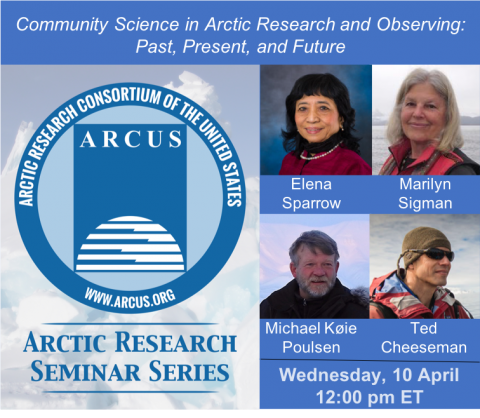
Community Science in Arctic Research and Observing: Past, Present, and Future
Arctic Research Seminar Series with Elena Sparrow, Marilyn Sigman, Michael Køie Poulsen, and Ted Cheeseman
2019-04-10
University of Alaska Fairbanks or Online: 8:00-9:00am AKDT, 12:00-1:00pm EDT

The Arctic Research Consortium of the U.S. (ARCUS) announces the next Arctic Research Seminar Series event featuring Elena Sparrow (UAF), Marilyn Sigman (Alaska Sea Grant), Michael Køie Poulsen (Nordic Foundation for Development and Ecology), and Ted Cheeseman (Polar Citizen Science Collective). The event will be co-hosted with the International Arctic Science Committee (IASC) and held on the University of Alaska Fairbanks campus in Fairbanks, Alaska. This seminar will also be available as a webinar live-stream for those unable to attend in person.

Registration is required for this event.

Please note, the in-person seminar will convene in room 501 of the Akasofu Building (2160 Koyukuk Drive) on the University of Alaska Fairbanks campus in Fairbanks, Alaska.

Abstract:

This seminar will feature four speakers. Each presenter will discuss how they have engaged Arctic residents or visitors in the process of data collection to enhance our understanding of northern environments and how they are changing today. There will be a discussion period following the presentations, centered on how insights gained from current projects can help envision the role of civic participation in the future of Arctic research and observing.

Presenters will include:

  • Elena Sparrow (University of Alaska Fairbanks, Winterberry Project): Engaging Youth and Community Members in Scientific Investigations and Civic Action Through Citizen Science
  • Marilyn Sigman (Alaska Sea Grant): Alaska CoastWatch Project – Using Citizen Science to Engage Alaskan Youth in Strengthening Community Resilience
  • Michael Køie Poulsen (Nordic Foundation for Development and Ecology, Integrated Arctic Observation System): Enhancing Community-Based Observing Programs in the Arctic
  • Ted Cheeseman (Polar Citizen Science Collective, Happywhale Project): Creating Polar Ambassadors through Citizen Science

The ARCUS Arctic Research Seminar Series invites leading Arctic researchers and community leaders to share their latest findings and what they mean for decision-making. These seminars will be of interest to the international Arctic research community, federal agency officials, congressional staff, non-governmental organizations, Arctic educators, and the public.

A live webinar is available to those unable to attend in person. Instructions for accessing the event online will be sent to webinar registrants prior to the event.

Webinars and Virtual Events
Separately Submitted Collaborative Proposals from Multiple Organizations in Research.gov
2019-04-10
Online: 9:00-10:15am AKDT, 1:00-2:15pm EDT

You are invited to participate in the National Science Foundation (NSF) Electronic Research Administration (ERA) Forum webinar. To participate in this Forum, please register now.

The topic for this forum will be Separately Submitted Collaborative Proposals from Multiple Organizations in Research.gov.

Please note, space is limited for the webinar. Registration is now open. Please register early. If you are co-located with colleagues, we strongly encourage you to view the WebEx session as a group, to allow for maximum participation by the research community.

Please share this information with your colleagues. They can also subscribe to our ERA Forum listserv to receive future ERA Forum notifications by simply sending a blank email to NSF-ERA-FORUM-subscribe-request [at] listserv.nsf.gov to be automatically enrolled.

Webinars and Virtual Events
Presenter: Dr. Elizabeth L Malone, Independent Researcher
2019-04-09
Online: 8:00-9:00am AKDT, 12:00-1:00pm EDT

Seminar 7 in the Series: From Science to Solutions: The State of the Carbon Cycle, the 2nd State of the Carbon Cycle Report (SOCCR2).

Abstract:

People's needs and wants are the starting point for social scientific investigation of how carbon is embedded in the conditions and in which they find themselves and the technologies they use. From energy sources to land management and from urban hardscapes to rural landscapes, carbon is emitted, conserved, or captured as people work, travel, eat, and perform other everyday activities and as human institutions and economic systems form and operate. Research that starts with such social configurations contrasts and complements studies that examine changes in the carbon cycle, identify points of emissions, and quantify the technical potential of reducing them. People-centered research into the social embeddedness of carbon involves a wide range of scientific areas and a commitment to involvement by stakeholders. Such research leads to findings that will deepen knowledge about how social systems both persist and change and people's multiple roles within those systems. Results can indicate pathways by which carbon emissions can be reduced and carbon sequestration increased.

About the Speaker:

Dr. Elizabeth L. Malone focuses on policy-relevant sociological research in global change issues, integrating disparate worldviews, data sources, and scientific approaches. She coordinated, drafted, and provided the science text for the National Intelligence Assessment on Climate Change in 2008 and was the technical lead for six regional reports for the National Intelligence Council (2009), summarizing climate change projections, impacts projections, and adaptive capacity. Malone was an author and review editor for the 2007 Intergovernmental Panel on Climate Change assessment. She helped develop structured methods for analyzing vulnerabilities to climate change. She edited, with Steve Rayner, Human Choice and Climate Change (4 vols. 1998), which assesses social science research relevant to global climate change. Malone holds a Ph.D. in sociology from the University of Maryland-College Park. Her book Debating Climate Change (2009) uses both discourse analysis and social network analysis to explore bases for agreement in the arguments used in the global climate change debate.

Webinar Access:

We will use Adobe Connect. To join the session, go to https://noaabroadcast.adobeconnect.com/nosscienceseminars, enter as "Guest", and please enter your first and last name. Users should use either IE or Edge on Windows or Safari if using a Mac. Audio will be available thru the computer only; no phone. Questions will be addressed in the chat window. This Webcast will be recorded, archived and made accessible in the near future.

Conferences and Workshops
2019-04-09 - 2019-04-10
Northern (Arctic) Federal University in Arkhangelsk, Russia

Held on a biennial basis, the 'Arctic: Territory of Dialogue' is a major platform for discussion with foreign partners of pressing issues and prospects for the development of the Arctic region.

“The International Arctic Forum has proven its role as a significant platform for open dialogue on the current Arctic agenda. Key issues for Forum participants include improving living standards for inhabitants of the Arctic region and preserving its unique environmental potential, safeguarding sustainable socioeconomic growth in the polar territories, and strengthening international cooperation with these objectives in mind”, underlined Anton Kobyakov, Advisor to the President of the Russian Federation and Executive Secretary of the Forum Organizing Committee.

Webinars and Virtual Events
2019-04-08
Online: 11:30am AKDT, 12:30pm PDT, 1:30pm MDT, 2:30pm CDT, 3:30pm EDT

Please join us for a live PolarConnect Event (webinar) with teacher Kim Young and the team studying Winter Respiration in the Arctic. This webinar will focus on the research that teacher Kim participated in over the summer of 2018 in the Arctic. She was part of a team that is researching seasonal changes in the amount of carbon dioxide (CO2) released from permafrost soils in Alaska. During this event, members of her team will be on hand to answer your questions. She will be broadcasting live from Massachusetts.

You can read more about her experiences in Alaska here:
https://www.polartrec.com/expeditions/winter-respiration-in-the-arctic

The event will be 1 hour long with Q&A at the end for teachers, students, friends and family.

This event is hosted through the PolarTREC PolarConnect program. Participants will have a chance to learn about research from the scientists, ask questions, and chat with the teacher and researchers during the presentation.

We will send out information before the event on how to join the webinar to webinar registrants.

Conferences and Workshops
2019-04-08 - 2019-04-11
Cambridge, United Kingdom

The 4th biennial workshop of Polar Educators International (PEI) will be held in Cambridge, United Kingdom, home of:

  • Scott Polar Research Institute (SPRI)
  • British Antarctic Survey (BAS)
  • UK Arctic Office and Scientific Committee on Antarctic Research (SCAR)

The workshop will be opened by Dr. Gabrielle Walker, co-author of The Hot Topic: How to Tackle Global Warming and Still Keep the Lights On. Dr. Walker works as a strategist, speaker and moderator with businesses to usher in a new sustainable world that addresses the challenges of new energy sources and climate change. She is an "ice-junkie" and has visited both poles many times.

Registration now open.

Conferences and Workshops
2019-04-07 - 2019-04-12
Vienna, Austria

The EGU General Assembly 2019 will bring together geoscientists from all over the world to one meeting covering all disciplines of the Earth, planetary, and space sciences.

The deadline for abstract submission is 10 January 2019, 13:00 CET or, for those applying for EGU Roland Schlich travel support, 1 December 2018, 13:00 CET.

All 2019 EGU members will be able to submit abstracts to the 2019 meeting. With a few exceptions, only one abstract as a first author will be permitted. Please find more information on EGU's call-for-abstracts announcement.