Dear ARCUS Community,

As summer is in full-swing here in Alaska (with the mosquitos to prove it), we are settling into the COVID-19 world in our professional lives, slowly recognizing that this is a marathon, not a sprint. We continue to move forward on our projects as we are able, notwithstanding the fact that ARCUS staff will not be traveling at least for the remainder of this calendar year. With AGU’s announcement of a “mostly virtual” fall meeting, we are brainstorming ways to offer support for virtual events and gatherings of our community, and will announce details next month. Please let me know if you have any ideas for ways that we may be able to support your AGU activities this year. 

As we are in the process of updating our strategic plan, we are also discussing ways to actively promote diversity and inclusion in the work that we do towards ARCUS’ vision of strong and productive connections among Arctic researchers, educators, Indigenous knowledge holders, Arctic residents, and other stakeholders. The work to foster open and collaborative activities in Arctic research is ongoing, and will require broad efforts across projects and organizations. For those interested in continuing discussion about these issues, I encourage you to join the Interagency Arctic Research Policy Committee (IARPC) Diversity and Inclusion Working Group self-forming team.

And as always, please feel free to contact myself or any Board or staff member with ideas on directions needed for Arctic research and how we can continue to build a collaborative and equitable Arctic research community together.

Sincerely, 


Helen V. Wiggins
Executive Director


ARCUS News & Announcements:

Sea Ice Outlook June Report -
The 2020 June Sea Ice Outlook (SIO) report is now available online. The Sea Ice Outlook provides an open process for those interested in Arctic sea ice to share predictions and ideas. The June report, in addition to pan-Arctic September minimum Outlooks (with a median Outlook of 4.33 million square kilometers), includes information on regional first ice-free date, sea ice probability, how observations are being used in forecasts, and several other analyses.

2020 Sea Ice for Walrus Outlook Season Closes -
The Sea Ice for Walrus Outlook concluded the 2020 season on Friday, 12 June after 12 weeks of weekly reports featuring local observations from seven Bering Strait Communities, National Weather Service sea ice and weather forecasts, and NWS and ACCAP satellite images. All reports are available in our archive. Thank you to our local observers and partners!


Requests for Arctic Research Community Input:

American Geosciences Institute Survey on the Impacts of COVID-19 on the Geoscience Enterprise - The American Geosciences Institute is conducting a year-long study to understand how geoscience employers and educational institutions are changing their workplace and instructional environments in response to the COVID-19 pandemic, and to discover which of these changes will become permanent. For more information and to participate, click here. 


The Ocean Enterprise Study 2020 - IOOS/NOAA are requesting input from businesses who provide infrastructure or products that support or conduct ocean observation and measurement by participating in the Ocean Enterprise Study 2020. To find out more information or to take the survey click here.


Member News & Announcements:

We are very happy to share the announcements and achievements of our members! If you have something that you would like us to include our next monthly newsletter &/or through other ARCUS communication channels, please contact Brit Myers at brit@arcus.org. 

Melting and Mining in Greenland: Understanding Arctic Climate Change Through Dialogue with Locals - The Arctic is warming at a rate that is almost twice the global average. While one can generalize about the global impacts of climate change, such as rising sea levels, food insecurity, and more droughts and floods, the impacts on Arctic communities—or any specific global community—are best understood through conversations at the local level. Learn more.    
Rebuilding the US Economy Through the Blue Economy - The COVID-19 pandemic is confronting the US economy with an unprecedented challenge that will require a large response from federal, state, and local governments for the coming months and most likely years to come. Learn more.

A NATO Flotilla Sails Back Into the Cold War - After months of Moscow’s provocations, the US and UK sent surface ships to the Barents Sea for the first time in 35 years. Learn more.

3D Sedimentary Architecture Showing the Inception of an Ice Age - New high-quality three-dimensional seismic data reveal a detailed geological record of buried surfaces, landforms, and sedimentary architecture over vast parts of the Norwegian North Sea and the inception of an Ice Age. Learn more.

UArctic Welcomes Cathy Sandeen as New Vice-President Academic - University of Alaska Anchorage Chancellor, Dr. Cathy Sandeen, has been named as UArctic's new Vice-President Academic, providing strategic leadership for all of UArctic's academic activities. Learn more. 

Charting a Course for ARM Aerial Measurements - In early March 2020, atmospheric scientists interested in aerial research took part in an ARM Aerial Instrumentation Workshop. Attendees engaged in talks largely focused on instrumentation and how users can get the best data on atmospheric components that are important for understanding Earth’s energy balance and improving the representation of atmospheric processes in earth system models. Learn more.  

WHRC Staff Spotlight: Dr. Scott Zolkos - Dr. Zolkos is a WHRC postdoctoral researcher who works on the effects of climate change on Arctic ecosystems, particularly from the lens of carbon and contaminant cycling. Learn more.  


Law in the Canadian North - A special issue of The Northern Review research journal is now available. This issue features a new article by UNBC’s Natalia Loukacheva exploring the evolution of the Arctic Council.

Research Protocols in Bering Strait Amidst COVID-19 Pandemic - Kawerak, in consultation with the Tribes of the Bering Strait Region, wrote a letter to advise planned research projects and researchers on protocols for research-related activities in the Bering Strait Region under COVID-19 conditions. Learn more.  

Recording of Dr. J.J. Frost’s Arctic Research Seminar -  ABR biologist Dr. Gerald (JJ) Frost was a featured speaker in the Arctic Research Seminar Series hosted by the Arctic Research Consortium of the United States (ARCUS) on 29 May 2020. If you were unable to attend or would like additional access to J.J.’s excellent talk, a recording of the seminar is now available online here.

‘Bering Science’ Publication Now Available - The Bering Sea continues to see dramatic changes in its climate, sea ice conditions, and wildlife, according to a new publication called, “Bering Science: Spring 2020 Bering Region Ocean Update.” The report was prepared through a partnership between the Alaska Ocean Observing System and UAF's International Arctic Research Center. 

New Projects Launched on Arctic Migration - Research on Arctic migration increases understanding of the specificities of migration in the northernmost regions of the world. The Arctic Centre at the University of Lapland is involved in altogether six new projects related to Arctic migration that have been launched during the past spring. Learn more.

Arctic Crashes: People and Animals in the Changing North -
A new volume edited by Igor Krupnik and Aron Crowell of the Smithsonian Arctic Studies Center examines rapid Arctic animal declines at regional and local scales from a diversity of historical, archaeological, evolutionary, and cultural/spiritual perspectives. Lean more.

Seminar on Spatial and Temporal Patterns in SW Greenland Firn Ice Layers - Rutger’s researcher Åsa Rennermalm was a featured speaker as part of the NASA Goddard Sea Level Rise Seminar series earlier this month. Watch her seminar recording and learn more about the upcoming seminar in the series here.

NREL, CCHRC Combine Forces to Increase Impact, Research in Arctic Region - The US Department of Energy’s (DOE) National Renewable Energy Laboratory (NREL) has taken a big step toward growing its mission space and impact through an expanded collaboration with Alaska’s Cold Climate Housing Research Center (CCHRC). Through the collaboration, the CCHRC staff will become NREL employees, creating new opportunities to access extreme climates and leverage CCHRC’s extensive research. Learn more.   

Research into Ecosystem Tipping Points in the Arctic - New Horizon 2020 project, ECOTIP, will assess the cascading effects of climate change to Arctic marine ecosystems and depending societies. ECOTIP will bring together a multidisciplinary group of scientists from more than 10 countries to advance understanding of the impacts of climate change on Arctic biodiversity and the cascading effects that biodiversity change can have on marine ecosystems, the climate services they provide, and the human communities that depend on them. Learn more.  

Science Happens on Arctic Ocean In Spite of 2020 Pandemic - A global pandemic could not stop the International Arctic Buoy Program from deploying drifting weather buoys into the Arctic Ocean off the coast of Utqiaġvik, Alaska during these past few months. With the collaborative effort of many partners, buoys were designed, fabricated, shipped, and deployed out on the sea ice before the ice broke away from Utqiaġvik for the summer. Learn more. 

We Need a Permafrost Monitoring System - Dr. Dmitry Streletsky, expert in cryolithology and professor of geography and international affairs at George Washington University (US), spoke in an interview with RIA Novosti correspondent, Natalya Paramonova, about why there is still no permafrost monitoring system in the world. Read the interview here.  

HOLOPEATFIRE Project Seeks Peatland Charcoal Data - In February 2020, C-PEAT initiated a new collaborative project called HOLOPEATFIRE, focused on peatland fires in the Holocene. The project’s steering group is currently seeking peatland charcoal data with associated chronologies. Learn more. 
Coal-burning in Siberia Led to Climate Change 250 Million Years Ago - A team of researchers led by Arizona State University School of Earth and Space Exploration Professor Lindy Elkins-Tanton has provided the first ever direct evidence that extensive coal burning in Siberia is a cause of the Permo-Triassic Extinction, the Earth’s most severe extinction event. The results of their study have been recently published in the journal Geology. Learn more.   

113th Meeting of the US Arctic Research Commission - After postponing the Commission’s original 113th meeting, scheduled for 24 March 2020 at the University of Maine, USARC met virtually on 22 June. The meeting focused on commission business and an initial discussion of the outline and content of USARC’s next publication, “Report on the Goals and Objectives for Arctic Research 2021–2022 for the US Arctic Research Program Plan.” A recording of the public portion of the commission meeting is available on USARC’s YouTube channel. 


Manifestation and Consequences of Warming and Altered Heat Fluxes Over the Bering and Chukchi Sea Continental Shelves - In this new publication, a temperature and salinity hydrographic profile climatology is assembled and used to assess changes of the Bering and Chukchi sea continental shelves over seasonal to century-long time scales. Learn more.

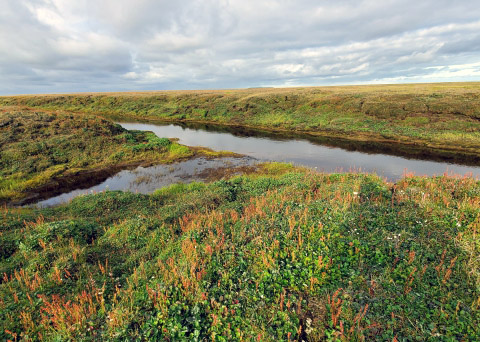
We Cannot Shrug Off the Shoulder Seasons: Addressing Knowledge and Data Gaps in an Arctic Headwater - Meta-analysis of 204 peer-reviewed studies revealed a strong temporal gap in observations of biogeochemistry and hydrology of the Kuparuk River in northern Alaska, with substantially fewer observations from the early and late "shoulders" of the thaw season. As climate change alters seasonality, filling this major data gap in the shoulder seasons is crucial to understand the response of Arctic ecosystems. Learn more.   
Spring is in the Air! (Or at Least in the Water) - In May, when air temperatures in Ny-Ålesund, Svalbard were still well under zero, the spring bloom was underway in the cold waters of Kongsfjorden. Researchers from the Norwegian Polar Institute were on site to track the timing of the spring algae bloom. Learn more.
The Science of Justice - As society grapples with the global discussion of social justice, educators at Sitka Sound Science Center have taken a moment to look at our own practices in our education programs. Learn more.

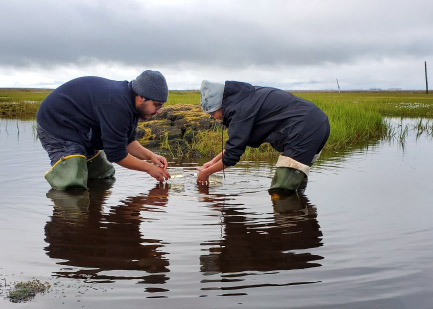
RSHU Students Take Part in White Sea Summer Surveys -Three RSHU oceanography students are taking part in the the Northern UGMS expedition on the research vessel Ivan Petrov in the White Sea. As part of their sampling and research activities, the students will also be carrying out microplastic studies.  Learn more.

Image result for university of virginia logoAssessing Ecosystem Functional Diversity in the Circumpolar Arctic Tundra Using Seasonal Dynamics of MODIS NDVI - UVA Researchers provided an update on their work to develop an ecosystem functional diversity product for the Arctic Tundra at the 2020 NASA ABoVE Science Team meeting. View the poster here. 

New & Renewing ARCUS Members
      

Kawerak, Inc

Jason Zottola
Austen Whitney
Gisele M.Arruda
Mary Gibbons
Cheryl Rosa
Christopher Ivins
Bruce Main

Membership Info

Funding 

ESIP Lab Projects - Proposals Due 1 July

MRI Synthesis Workshops - Proposals Due 3 July

NSF NNA Community Office - Proposals Due 10 July

NSF INCLUDES Planning Grants - Proposals Due 13 July

NASA Cryospheric Sciences - Proposals Due 30 July. 

NSF Coastlines & People - LOI Due 10 August

NSF Physical Oceanography - Proposals Due 17 August

NSF Human-Environment & Geographical Sciences Program - Proposals Due 18 August

ERC Advanced Research - Proposals Due 26 August

NSF Coastlines & People - Proposals Due 9 September

NOAA Broad Agency Announcement - Proposals Due 30 September

NSF 2021 Convergence Accelerator Conferences - Proposals Due 16 October

NSF Paleo Perspectives on Climate Change - Proposals Due 20 October

NOAA Office of Ocean Exploration & Research - Proposals Due 22 October

NSF Improving Undergraduate STEM Education - LOI Due 17 November

NSF Improving Undergraduate STEM Education - Proposals Due 26 January

NASA ROSES 2020 - Various Due Dates 

NSF Critical Aspects of Sustainability: Micro- and Nanoplastics

NPRB 2020 Core Program Funding

Robert Wood Johnson Foundation Culture of Health Research Grants

Canada NSERC Alliance Grants

NSF Arctic Research Opportunities 

University of Oulu Short-term Visit Grants

NOAA NCEP Short-Term Research Collaboration Opportunities


Job Openings

University Centre Svalbard - Professor of Remote Sensing of the Cryosphere - Applications Due 1 July

Alaska Center for Energy and Power Project Manager - Applications Due 5 July

Stockholm University Postdoc in Arctic Climate Processes - Applications Due 12 July

University of Virginia Research Associate in Environmental Sciences - Applications Due 15 July

University of Lapland Postdoc in Geography/ Ecology/ Earth System Science - Applications Due 3 August

KU Leuven PhD in Modeling/Prediction of Wildfires in the Boreal and Arctic - Open Until Filled. 

UC Berkeley Postdoc in Cryosphere Data Science - Open Until Filled

Wildlife Conservation Society Beringia Communications Coordinator - Open Until Filled

NANA Science & Technology Advisor - Open Until Filled

Sandia Postdoc in Acoustic Sensing of the Arctic Ocean - Open Until Filled

UMass Amherst Postdoc in Arctic Hydrological Biogeochemical Modeling - Open Until Filled

NAU Postdoctoral Scholar for the Goetz GEODE Lab - Open Until Filled

University of Victoria Biogeochemical Modeling PhD - Open Until Filled

CIRES/NOAA NCEI Marine Geophysics Data Manager - Open Until Filled

UAF Coastal Resilience Graduate Research Assistant - Open Until Filled

CIRES/NSIDC Science Communications Manager - Open Until Filled

Earth Science Information Partners (ESIP) Executive Director - Open Until Filled

UAF Assistant Professor of Alaska Native Studies - Open Until Filled

ORNL Senior Research Scientist in Earth System Modeling - Open Until Filled

UAF Postdoc for Sea Ice Thickness Observing System Design - Open Until Filled

UAF Institute of Arctic Biology Genomics Core Lab Coordinator - Open Until Filled

Harvard Medical School Research Fellow in Indigenous Community Well-Being - Open Until Filled

Tufts University PostDoc in Geologic Fracture Mechanics - Open Until Filled

University of Wisconsin-Madison Assistant Professor of Glaciology/Ice Flow Modeling - Open Until Filled

University of Wisconsin-Madison Assistant or Associate Professor of Polar Climate - Open Until Filled

Penn State Assistant Professor with POLARIS project - Open Until Filled

UT El Paso Postdoc in Remote Sensing & Physiological Ecology - Open Until Filled

ORNL Earth System Modeling Staff Member - Open Until Filled

NSF Office of Polar Programs Program Directors - Open Until Filled

UAF Postdoc for NSF Lake Drainage Project - Open Until Filled

NSF Program Director for Polar Cyberinfrastructure - Open Until Filled 


Other Professional Opportunities

WCRP Joint Scientific Committee Members - Nominations Due 15 July

International Glaciological Society Awards - Nominations Due 17 July

Polar Cooperation Research Centre Fellowship - Applications Due 30 July

Caleb Lumen Pungowiyi Scholars Program - Applications Due 31 July

SCAR Fellowship - Applications Due 26 August

NSF Earth Sciences Postdoctoral Fellowships - Proposals Due 9 September

European Commission Individual Fellowships - Applications Due 9 September

Fulbright Arctic Initiative - Applications Due 15 September

PAGES Early-Career Collaborative Scholarship Award - Nominations Due 30 September

NSF Graduate Research Fellowship - Proposals Due 19 October

AAAS Science & Technology Policy Fellowship - Applications Due 1 November

Smithsonian Fellowship Opportunities - Various Due Dates


Featured Events

UArctic Congress - Postponed to May 2021

 
Witness the Arctic
ArcticInfo
Directory of Arctic Researchers

The ARCUS monthly report is administered by the Arctic Research Consortium of the United States (ARCUS).
Please visit us on the World Wide Web at: 
https://www.arcus.org
Follow ARCUS on twitter: @arcticresearch

At any time you may:
Subscribe by using the web form located at:

https://www.arcus.org/arcus/member-newsletter

To be removed from the list use the link below:
Unsubscribe

ARCUS
Arctic Research Consortium of the United States
3535 College Road - Suite 101
Fairbanks, Alaska 99709-3710
United States
ARCUS