Interagency Study of Environmental Arctic Change (SEARCH)

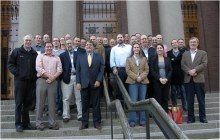
The State of the Arctic Conference: At the Forefront of Global Change was held 16-19 March 2010 in Miami, Florida. The main goal of the conference was to review understanding of the arctic system in a time of rapid environmental change. Topics ranged from basic understanding of the Arctic and...
An AON report, "Arctic Observing Network (AON): 2009 Status Report and Key Recommendations" was released in August 2010. The report summarizes discussions from the third AON principal investigators meeting, held in fall 2009, and includes sections on AON accomplishments; network design, gaps, and...
An "Understanding Arctic Change" workshop was held 29 September–1 October 2010 in Seattle, Washington as a collaborative activity of the SEARCH and ARCSS programs. The workshop gathered a diverse group of scientists to develop a white paper that:
Identifies key unknowns and key science questions...
Hajo Eicken, professor of geophysics at the University of Alaska Fairbanks, was appointed new Study of Environmental Arctic Change (SEARCH) Science Steering Committee (SSC) Chair in early 2010. Dr. Eicken's research interests are in the field of sea-ice geophysics. In particular, he is interested...
Arctic System Science Program
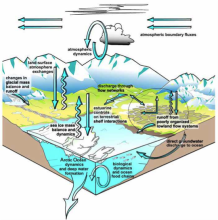
The Freshwater Integration Effort (FWI) was an Arctic System Science (ARCSS)-funded interdisciplinary program focused on the arctic hydrological cycle. FWI consisted of 22 projects, which ran from 2002-2006, on all aspects of the arctic freshwater system. The program is now undertaking final...
The Freshwater Integration Effort (FWI) held a synthesis capstone workshop on 30 September–4 October 2009 in Stockholm, Sweden to tie together key findings and outcomes of the FWI effort and integrate them with other international activities.
Investigators from the 17 Arctic System Science (ARCSS) Changing Seasonality in the Arctic System (CSAS) Projects that were awarded in 2009 (see Witness Fall 2009) started a process to coordinate research efforts between projects with a Principal Investigator meeting in October 2010. The goal of...
Arctic Natural Sciences Program
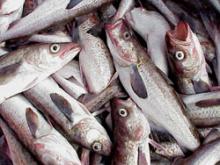
The Bering Sea is one of the most productive marine ecosystems in the world, sustaining nearly half of U.S. annual commercial fish landings and providing food and cultural value to thousands of coastal and island residents. In 2007 the North Pacific Research Board (NPRB) and the National Science...
Arctic Social Sciences Program
BOREAS is a major international and interdisciplinary research program in arctic social sciences and humanities. BOREAS was started in 2003 through collaboration between the European Science Foundation, the U.S. National Science Foundation, and the Canadian Social Science and Humanities Research...
ARCUS announces the release of the second edition of The Earth is Faster Now (Krupnik and Jolly, eds. 2002) with a new 2010 forward by co-editor Igor Krupnik. The volume features ten individual studies, primarily in arctic North America, on indigenous knowledge of climate change. It includes...
Science News
A recent study indicates that ground surface temperatures in the Arctic may be more sensitive to the level of carbon dioxide (CO2) than previously thought. Using three independent proxy temperature records from an early Pliocene peat deposit in the Canadian High Arctic, investigators estimate that...
Science Policy News
On 22 July 2010, the Obama Administration directed the National Science and Technology Council (NSTC) to coordinate certain activities assigned to the Interagency Arctic Research Policy Committee (IARPC). The Arctic Research Policy Act of 1984 created IARPC and the U.S. Arctic Research Commission (...
National Science Foundation News
The NSF Office of Polar Programs has released an announcement of opportunity entitled "Ship-based Science Technical Support in the Arctic (STARC): Augmenting Science Support on the U.S. Coast Guard Cutters Healy and Polar Sea."
NSF has released a Dear Colleague Letter to invite synthesis proposals for data resulting from the Bering Ecosystem Study (BEST) program. BEST, initiated in 2007 by the NSF Office of Polar Programs, was designed to develop understanding of the effects of a varying sea-ice cover on the Bering shelf...
This summer, the U.S. Coast Guard announced that the icebreaker Polar Sea experienced an engine casualty and would be unable to deploy its scheduled fall and winter 2010 cruise activities. The engine difficulty was discovered during a scheduled dry-dock maintenance period following their successful...
Capitol Updates
The Administration's FY 2011 budget proposal, released on 1 February 2010, provides $7.4 billion for the National Science Foundation. This funding level reflects the President's Plan for Science and Innovation giving NSF an 8% increase over the level enacted in the FY 2010 federal budget.
Interagency News
The White House announced a major restructuring of the National Polar-orbiting Operational Environmental Satellite System (NPOESS) as a result of delays, cost overruns, and difficulties with the management and budget structure. NPOESS was conceived in 1994 as a multi-agency initiative to develop a...
In April 2010, NOAA released a draft Arctic Vision and Strategy, which provides a high-level framework and strategic goals to address NOAA's highest priorities in the region. This report articulates a vision for the Arctic based on assumptions that the region will continue to experience dramatic...
U.S. Arctic Research Commission
The Arctic Research Policy Act of 1984 established the U.S. Arctic Research Commission (USARC), whose principal duties are to develop and recommend an integrated national arctic research policy and to assist in establishing a national arctic research program plan to implement the policy. USARC...
International News
The Oslo Science Conference, held 8-13 June 2010, marked the conclusion of the International Polar Year (IPY), which ran from March 2007 to March 2009. Under the auspices of the International Council for Science (ICSU) and the World Meteorological Organization (WMO), the IPY Joint Committee decided...
A Note from the ARCUS President
The State of the Arctic Conference, held in Miami, Florida 16-19 March 2010, was a truly significant event. The Arctic is undergoing enormous changes, primarily driven by climate, but with startling socio-economic as well as ecological impacts. This conference brought together a wide range of...