
In February, NOAA released its final Arctic Vision and Strategy, which provides a high-level framework and strategic goals to address NOAA's highest priorities in the Arctic.
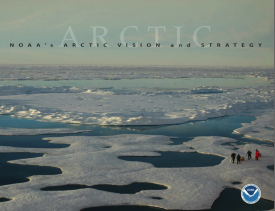
According to the vision document, NOAA will focus its efforts on the following six priority goals:
- Forecast Sea Ice
- Strengthen Foundational Science to Understand and Detect Arctic Climate and Ecosystem Changes
- Improve Weather and Water Forecasts and Warnings
- Enhance International and National Partnerships
- Improve Stewardship and Management of Ocean and Coastal Resources in the Arctic
- Advance Resilient and Healthy Arctic Communities and Economies
In support of this vision and in order to fulfill NOAA's missions and responsibilities that are critical for other agencies to succeed in fulfilling their responsibilities, NOAA intends to undertake four steps.
First, in the next five years, implement, through a NOAA five-year Arctic Action Plan, actions to achieve the six primary goals that are identified and described in this document in support of the arctic vision.
Second, in order to accomplish these goals, coordination across all NOAA Line and Staff Offices and collaboration with local, regional, federal, academic, and non-governmental organizational partnerships will be required.
Third, develop an engagement strategy to reach internal and external employees, partners, and stakeholders. As a starting point, establish a single point of contact within NOAA Senior Executive Leadership that is accountable for implementation of this strategy.
Fourth, include the formalization of a detailed budget strategy as part of the NOAA Arctic Action Plan. NOAA anticipates initial investment of $10 million towards the implementation of this strategic plan, recognizing that additional funds will be needed to achieve these goals.
The Vision and Strategy can be downloaded at: http://www.arctic.noaa.gov/.